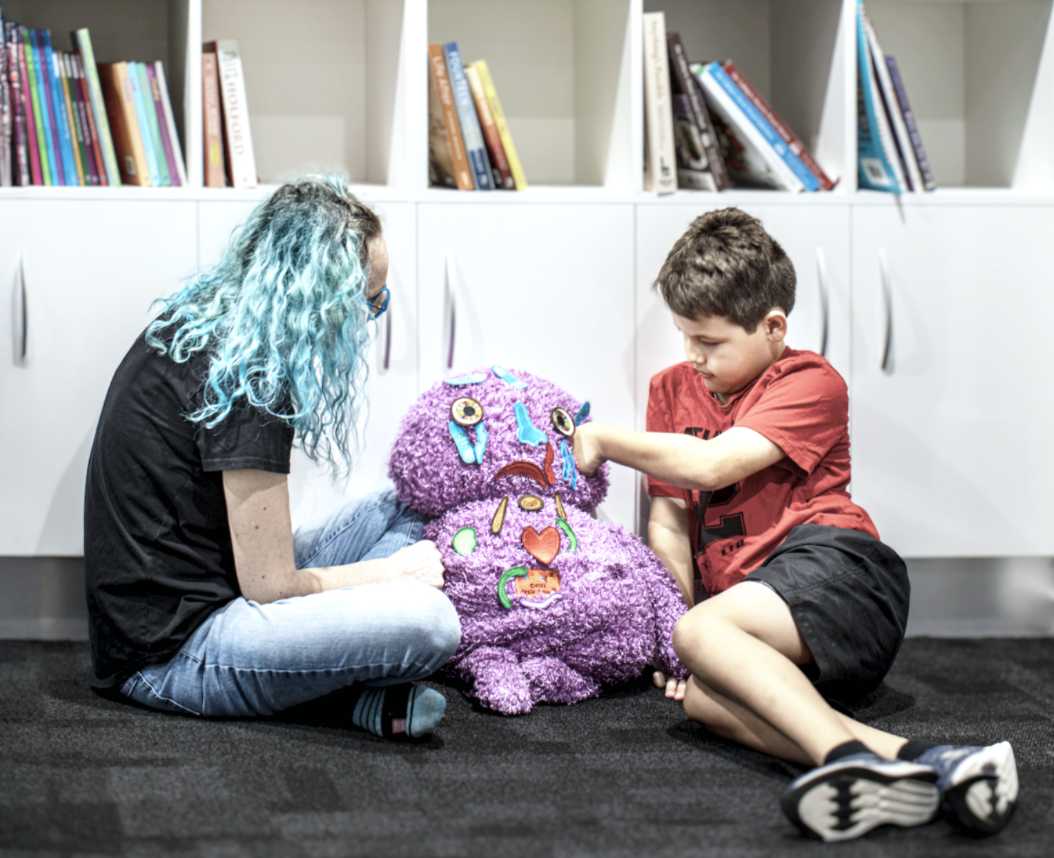
Play Therapy
Child-Centred Play Therapy is evidence-based therapy for children experiencing behavioural, emotional and cognitive challenges.
Play Therapy allows children to:
✦ Heal
✦ Communicate
✦ Express their feelings
✦ Regulate their emotions
✦ Learn coping skills
✦ Plus more

About Play Therapy!
Children often aren't developmentally ready or have the cognitive ability to verbally communicate their thoughts and feelings, particularly in relation to challenging situations. Child play therapyallows children to "play out" these experiences using the most natural, dynamic and self-healing process in which children engage in - play (Garry L Landreth).
Play Therapy allows children to engage in play with few limitations. This technique allows for the child to progress through what they are feeling or experiencing at their pace, in their way but within a safe environment.
The therapist's role is not to judge the child but to reflect on their play. This assists in establishing a trusting and respectful relationship between the child and the therapist. When the child feels safe and secure in an environment, they are more likely to freely express any feelings that they have or are conflicted by. Most children will express this through their play experiences.

Who does Play Therapy benefit?
Research supports children who experience trauma, social and emotional challenges or have learning difficulties can benefit from Play Therapy.
This may include children who are experiencing or have diagnoses relating to:
✦ ADHD
✦ Anxiety
✦ Autism
✦ Communication difficulties
✦ Social and emotional difficulties
✦ Trauma
✦ Developmental delay or learning difficulties
✦ Anger or aggressive behaviour
✦ Chronic illness
✦ Grief
✦ Plus more
Play Therapy allows children to experience and express emotions, develop coping strategies, strengthen problem-solving skills and process experiences within a safe, supportive and child-centred environment.
Children may develop or strengthen skills relating to:
✦ Empathy
✦ Respect
✦ Responsibility
✦ Emotional expression
✦ Emotional regulation
✦ Problem-solving
✦ Social skills
✦ Relationships with family and peers
✦ Reducing anxiety, grief and emotional distress
✦ Holistic development
Frequently Asked Questions!
-
Often when you ask a child what they did in the playroom, their response will be ‘oh I just played’. Children perceive their time in the playroom as just playing, while they are in fact, expressing thoughts, emotions and memories in a symbolic way that their subconscious mind may have disguised or hidden.
Play is a child's natural form of communication.
-
Play therapists are specifically trained to support a child’s ability to express and ‘play out’ their emotions, fears, memories and insecurities. Play therapists are trained in understanding the symbolic ability that every toy and resource has in their playroom and the manner in which a child engages with these toys.
"Toys are selected, not collected".
-
When people hear the words "play therapy" they can perceive this as children learning how to play.
The fact is, play therapy is not the same as playing. Play therapy uses the child’s natural tendency to “play out” their responses to life situations.
How a child plays is individual. The child leads the play while the therapist reflects and tracks how they are engaging with the toys and any emotions that they portray in these experiences.
In saying this, we have had parents comment that their child now engages in more functional play since commencing play therapy!
-
Play therapy is developmentally appropriate for children, where children are supported in both a verbal and/or symbolic way when expressing their emotions.
Children communicate and interact through play. They do not need words to express themselves.
In the words of Garry Landreth (founder of Center For Play Therapy, the largest play therapy training program in the world).
“Toys are children’s words and play is their language."
-
Psychology is talk-based specific therapy which requires cognitive thinking/logic from higher parts of the brain that are still developing in early adulthood. While psychology can offer significant benefits, particularly for older children, play therapy represents a distinct modality.
Play therapists receive specialised training to assist children in navigating various social and emotional challenges, which can be similar to the reasons for seeking support from a psychologist. In terms of methodology, within the play therapy setting, the child takes the lead in determining how they navigate their emotions using the play resources. Unlike traditional therapy where they might be asked, in the play therapy room, the child autonomously decides what and when to share, expressing themselves in a manner that feels natural to them—through play!
-
Children will always exhibit typical behaviors of being kids, such as tantrums, yelling, and stomping feet. Play therapy has the objective of reducing (but not eradicating) these challenging behaviors, offering children a secure environment to develop and recover using the healing aspects of play. Through play, children can acquire coping mechanisms for self-regulation.
Regrettably, play therapists are not capable of completely eliminating these behaviours and transforming a child into an angel, although we empathise with the desire for such a transformation!
-
Similar to any therapeutic approach, play therapy sessions are confidential, maintaining privacy between the therapist and the child. These sessions are dedicated to establishing trust between the therapist and the child. However, in cases where there is a potential risk to the child's safety or others, appropriate measures will be taken.
Scheduled feedback sessions with parents or caregivers occur every 4 to 6 weeks, providing an opportunity to discuss the child's advancements and address any inquiries you might have.
-
Like many therapies, the path of this process is unique to each individual and cannot be precisely foreseen. On average, a child may need approximately 20 sessions before reaching a point where therapy is no longer necessary. Some children might need fewer sessions, while others may require more. The frequency of appointments can influence this as well. Weekly sessions for your child are strongly advised, although fortnightly sessions can be considered after consulting with the therapist.
If you are unable to commit to regular sessions for your child, play therapy may not be the most suitable option.
-
No referrals are required, you can self-refer your own child if you think they could benefit from play therapy.
If you are unsure if play therapy could help, or have any other queries, then please don't hesitate to contact us.
-
Play therapists need to hold a minimum of a bachelor’s degree in human services related fields including social work, psychology, counselling, occupational therapy, art therapy, music therapy, early childhood education or similar in order to study post graduate play therapy studies here in Australia.
Ideally, they should also be registered with a recognised play therapy association. If you're unsure, always verify the play therapist's credentials!
Children suited for Play Therapy are generally 3 - 12 years of age; exceptions can apply.
This service is NOT covered by Medicare however if your child is on NDIS then this could be covered if on a self or plan-managed plan.
Weekly sessions (preferably on the same day at the same time) are HIGHLY recommended to enable Play Therapy to be effective.
Additional Information
Resources
Play Therapy is …
Play Therapist Aideen McCartney explains play therapy in this short video.
Introduction to Play Therapy for Parents
"This is an introduction to play therapy for parents of children who will be participating in play therapy."
Introduction to Play Therapy for Children
This video introduces play therapy for children who are starting therapy.
Play Therapy works …
This video introduces and promotes the value of play and play therapy.